
Trace Hopkins County Former Owners by Transfer
A Hopkins County former-owner chain is easiest to build from a deed. The deed must be tied to the right parcel. Every transfer names a seller and buyer. It carries a recording date. It often points to an earlier book/page or instrument number. Those fields let you step back one ownership event at a time. They also keep you from assuming that everyone sharing a name owned the same tract.
| Transfer Date | Grantor to Grantee | Deed Type | Reference to Capture |
|---|---|---|---|
| Newest recorded transfer | Seller to present grantee | Warranty, quitclaim, fiduciary, or other deed | Instrument or book/page plus prior-deed clause |
| Prior acquisition | Earlier seller to the newest deed's grantor | Deed named by the cross-reference | Legal description, consideration if shown, and parcel clue |
| Earlier book entry | Previous owner pair | County deed-book instrument | Book/page, index role, and parent-tract reference |
| Non-deed transition | Decedent, estate, heirs, or court-appointed seller | Probate, commissioner, sheriff, or executor trail | Court file, order, fiduciary deed, and recording link |
Treat the table as a worksheet. It does not promise every step is online. Record the exact names, dates, map ID, and cross-references before opening the next record.
Start Hopkins County Ownership History with the Current Grantee
The Hopkins County Clerk records and preserves authorized deeds. The Clerk points online viewing to TitleSearcher, a third-party hosted service. Start with the present owner's acquisition instrument. That owner shows up as grantee. Match the legal description, an address or map clue, and the prior-deed reference. Trust the right parcel only after that check.
The vendor's public material documents name searches with date ranges and cross-reference links. It publishes no first online year for Hopkins County deed records. A start date alone searches forward. An end date alone reaches back only to 2000. A two-sided range is the safer test for an older chain.
The Clerk's legal-records page is the official route into that system. It confirms that deeds, mortgages, liens, releases, and plats all belong in the recorder trail. The public TitleSearcher landing page shows the vendor access point for the Hopkins County deed trail.
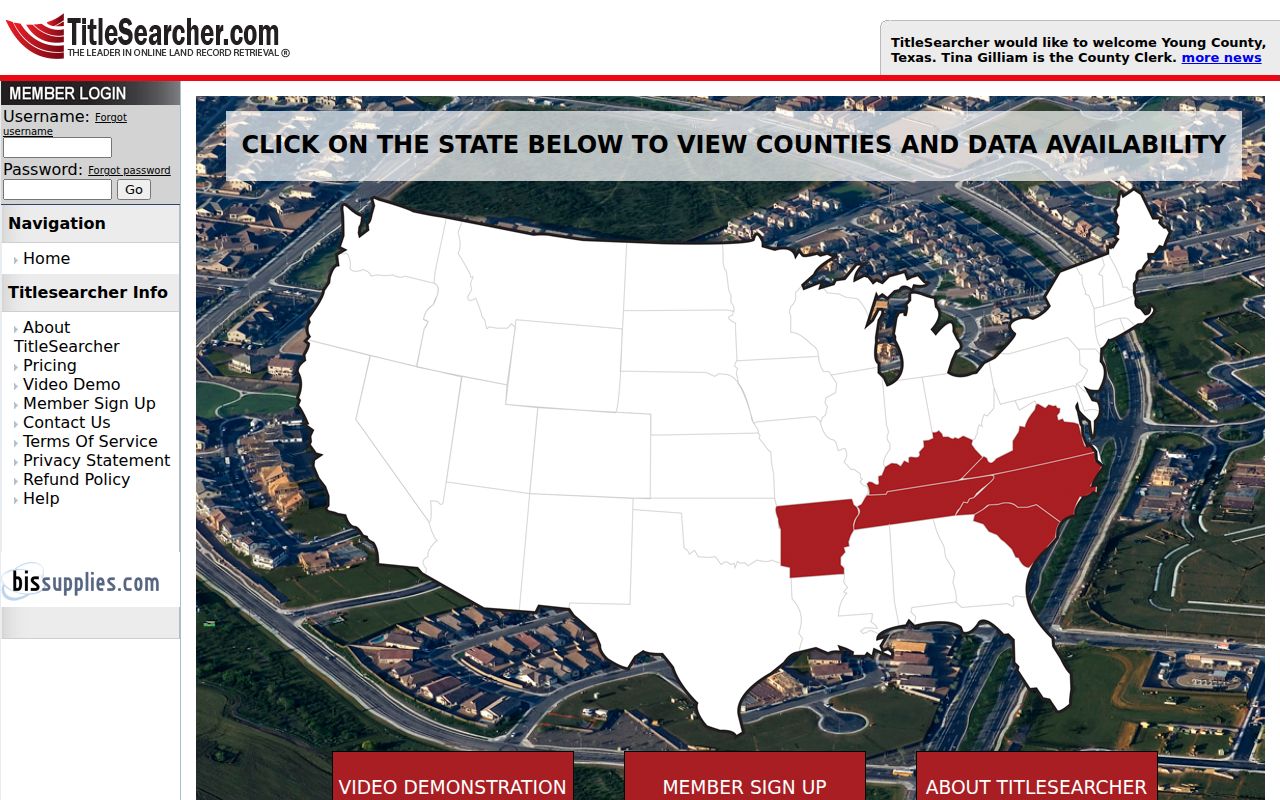
This screen is only an entry point. A finished former-owner chain is not handed over here. The matching work starts once county, names, dates, and deed references check out.
Note: TitleSearcher's earliest online Hopkins County year is unstated, so an empty web result does not mean no deed exists.
Use the Prior-Deed Clause to Reconstruct Hopkins County Owners
A prior-deed clause is often the strongest bridge between one owner and the next. Copy the book/page or instrument number exactly, along with the tract description. Then search the person who signed away the newest deed. Treat them as a grantee in the earlier period. That reverses the current transfer and shows how the former owner first acquired the land.
- Grantor
- The person or entity conveying an interest.
- Grantee
- The person or entity receiving an interest.
- Chain of title
- The ordered sequence of instruments connecting ownership through time.
- Reverse index
- An index organized by grantor, useful for testing later conveyances.
- Quitclaim versus warranty deed
- Different forms of conveyance that do not, by their labels alone, prove the quality of title.
Trust the legal description over a modern street address. An old tract may predate the address, the subdivision, or a later split.
Walk the Hopkins County Deed Chain Backward
Work backward in a disciplined loop. The goal is not collecting names. It is connecting each prior owner to the same land and to the next transfer.
- Find the newest acquisition deed with the current owner shown as grantee.
- Record its grantor, date, instrument or book/page, legal description, and prior-deed reference.
- Search that grantor as an earlier grantee, using a bounded date range and name variants.
- Compare the tract and cross-reference, then repeat with the next prior owner.
- When the web index stops, carry the last verified reference to the clerk, KDLA, library, or historical collection.
A TitleSearcher entry marked "Not Indexed" has not been verified or certified in the vendor process. Treat it as a lead. Confirm its party and property data against the image or a certified copy first.
Take Earlier Hopkins County Former Owners into Deed Books
Kentucky Department for Libraries and Archives guidance describes Kentucky deed-book holdings running generally from 1781 through 2018. Coverage varies county by county. That statewide span is not a claim about Hopkins County coverage. It simply points researchers toward deed books, grantor and grantee indexes, microfilm, and archival copies. These matter when the modern vendor index stops short of the needed year.
The Hopkins County Clerk remains the first local custodian to ask about a volume, film, plat book, or unscanned instrument. A precise request helps. It gives both parties, a date range, instrument type, book/page if known, map ID, and whether a certified copy is needed. The Kentucky Open Records Act also applies. Under KRS 61.870 through 61.884, a resident may describe an identifiable public record. The resident may then request inspection or copies in person, by mail, fax, or email.
Note: Ask whether an older item is indexed, scanned, or stored in a deed or plat book, on microfilm, or tied to probate.
Find Hopkins County Previous Owners through Probate Clues
Death and estate transfers can break a tidy buyer-to-seller chain. The clerk routes wills and name changes to the Deed Room/Probate after Probate Court approval. The probate or court file identifies the decedent and the fiduciary. It also names the heirs, the parcel description, and the authority to convey. From there, look for the executor, administrator, commissioner, or related deed in the recorder index.
Commissioner and sheriff deeds may reflect court-directed or enforcement sales. Their unusual deed type is no reason to skip the transfer. Capture the case reference, parties, order, and recorded deed. That way the estate or court event connects cleanly to the next owner of record.
Bridge Hopkins County Past Owners with Tax Rolls and Local Sources
Deed references sometimes dead-end. That is when other Hopkins County sources earn their keep. Tax rolls, plats, city directories, census entries, newspapers, and probate files can tie a name back to a tract. They point the way. They never replace the recorded conveyance itself. Copy tax-map strings exactly when you write to an office, including M-26-11-12A/B, DS-7-2-16, and MADISONVILLE 196 M01.
A Preservation Grant Left a Hopkins County Records Clue
A 2014 State of the County speech described a Department for Libraries and Archives grant topping $33,000. The grant funded document shelving and preservation. The speech proves records-care work happened. It does not promise a current program or that every volume survives.
So ask about format and location. An image missing online may still exist as a bound deed book, a microfilm roll, or an archive copy. It might also survive as a cross-reference another custodian holds. Every fallback request should begin with the last verified deed reference.
Test Every Hopkins County Former-Owner Name Match
The same name shows up in many roles. A party to a Hopkins County deed may be an individual, a spouse, an estate, a trust, a company, or a married-name variant. Search grantor and grantee roles alike. Then compare tract, date, legal description, and prior reference before trusting a match. A shared surname alone proves nothing.
TitleSearcher's public material notes that cross-reference and refer-back links support chain research, and certification can add property description and party details. Save each result as you go. An index record can change after certification.
Know Where Hopkins County Ownership Records Stop Online
The earliest online year for Hopkins County TitleSearcher is not settled. For older land history, work through the Clerk's deed books and indexes. KDLA microfilm or archival service offers another path. So do Hopkins County-Madisonville Public Library collections and local historical societies. Need one deed copy rather than a full backward chain? Use the dedicated Hopkins County deed records guide.
A chain holds only when every transfer touches the same land. Parent tracts, replats, address changes, estate events, and court sales can break the thread. A recorded plat, court file, or probate record may be needed. Without it, the next owner of record may not come into focus.
Use records responsibly. Hopkins County former-owner research supports house history, estate work, and property diligence. Never use public records to stalk, harass, threaten, or harm a living person.